Cocoraque Butte: A Storied O’odham Landscape

You’re standing in a place the Tohono O’odham call home—ancestral desert country where stories, ceremonies, and land are inseparable. The Nation numbers over 28,000 members today; the Garcia Strip of their reservation borders Cocoraque Butte, tying modern life to a deep past.

What “Cocoraque Butte” Means to the O’odham

The O’odham name for Cocoraque Butte is Shontok. In O’odham, shon can mean “source/beginning” and may refer to the hand-dug well at Cocoraque Ranch; it can also mean “to pound,” echoing the pecking that created the rock art you see here. Place names like this reach back to Huhugam times.
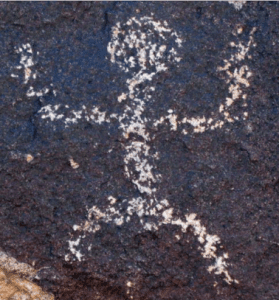
Petroglyphs: Two Millennia on Stone

As you climb the west slope, you encounter hundreds of petroglyphs—geometric forms, animals, plants, and human figures. Some designs date to the Archaic Period (2,000–3,000 years ago); many are Hohokam (A.D. 450–1450). For the O’odham, these are o’ohadag—sacred signs of spiritual presence set into the land.

The Maze: Identity in Stone

One especially rare carving is an early style man-in-the-maze design—an emblem of O’odham identity remembered from basketry and connected in oral history to Casa Grande (Wa’aki, “The Great House”). It links Cocoraque to a network of sacred places stretching from southern Arizona into northern Mexico.

Mission Era Traces

Among the carvings is a church motif—likely post-eighteenth century—and 1930s initials “RG,” which local memory associates with Tohono O’odham rancher Richard Garcia of the adjacent Garcia Strip. Historic travel routes to the San Xavier Mission passed by here.

Living Connections and Stewardship

O’odham cultural leaders visited in 2008, affirming Cocoraque Butte as part of their traditional lands and “an awesome site.” They emphasized education, respect, and careful public access—values shared by local ranch stewardship.

If You Visit: How to Show Respect

  • Stay on established paths; do not touch or chalk the rock art.

  • Leave artifacts in place; photographs are welcome—hands are not.

  • Pack out all trash; keep pets controlled to protect wildlife and sites.
    These guidelines reflect the community’s request to protect a fragile, sacred landscape for future generations.

A Quiet Place with Deep Stories

From the crest, you can see the Garcia Strip below, Recortado Mountain (a refuge in 19th-century conflicts), the distant Sierritas of O’odham tradition, and Tucson’s modern edge—history and nature layered in view.

Sources

Interpretive content adapted from T. J. Ferguson’s report for the Arizona Open Lands Trust, including 2008 field visits with the Tohono O’odham Cultural Preservation Committee and cultural experts.